FAMACHA Records for Sheep and Goats
FAMACHA records are useful only when the check is done with official training and an official card, then tied to the animal, date, and field context. A phone photo can document that a check happened. It cannot replace the card or become a colour reference later.
If a dewormer seems less effective than it used to, resistance may be part of the problem. Dosing accuracy, parasite species, product choice, timing, and treatment efficacy also need veterinary review. University of Calgary researchers report that resistance to ivermectin and benzimidazoles is common in western Canada. That makes selective treatment and good follow-up records more important, not less.
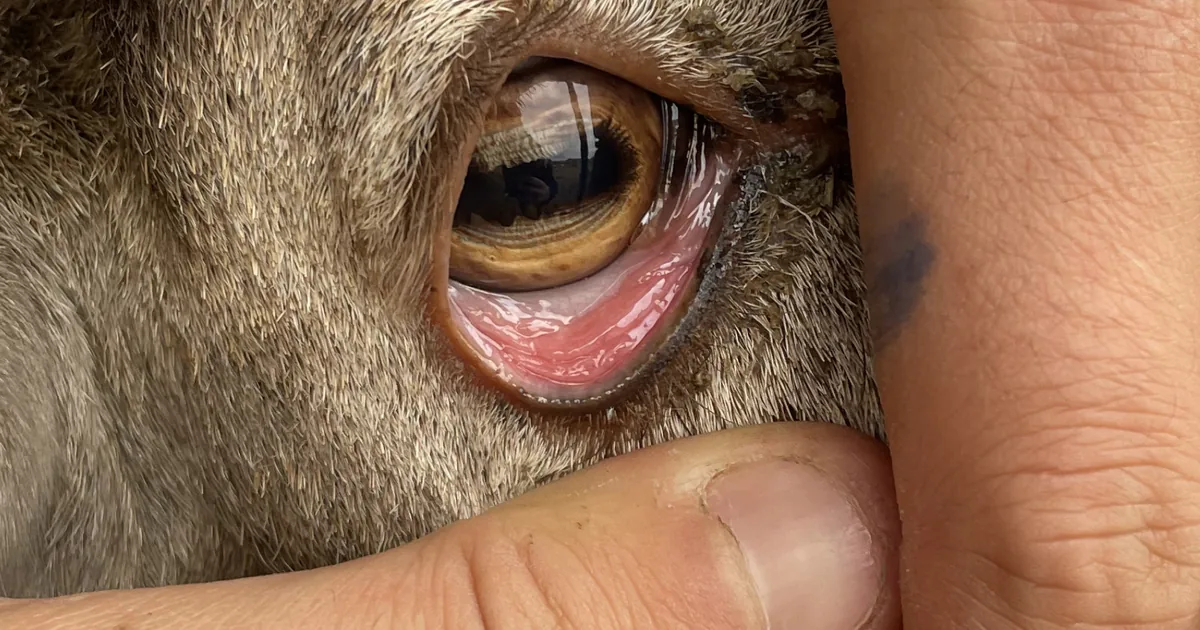
Why whole-flock deworming creates resistance pressure
Treating every animal exposes more of the parasite population to the same drug. The parasites that survive pass on their resistance. Repeating that pattern can reduce how well a dewormer works on the farm.
Refugia is the part of the parasite population not exposed to a dewormer, including parasites in untreated animals and on pasture. Maintaining refugia is one part of resistance management. It does not mean guessing which animals can go untreated. That decision belongs inside a trained flock protocol built with your veterinarian.
The American Consortium for Small Ruminant Parasite Control explains how FAMACHA supports targeted selective treatment for barber's pole worm (Haemonchus contortus). The records connect each trained field observation to whatever action the farm protocol called for.
What FAMACHA does and does not tell you
Barber's pole worm feeds on blood and can cause anemia. FAMACHA uses lower-eyelid colour as a clinical sign of anemia in sheep and goats. It does not identify every parasite, explain every cause of anemia, or replace fecal egg count reduction testing, body-condition assessment, and veterinary examination when those are needed.
Use FAMACHA only with an official card in hand and hands-on training in the checking technique. ACSRPC says producers must receive training before they receive a card. Its online certification page lists approved course options, and Louisiana State University is the sole distributor in North America. The FAMACHA do's and don'ts also say not to reproduce the card colours, score from memory, or use a card printed from the internet. This article does not reproduce the colour chart, category scale, or treatment thresholds.
For each check:
- Work in natural daylight and check both eyes.
- Assign the category only with the official card in hand and the trained technique.
- Follow the treatment and recheck protocol set with your veterinarian.
- Ask your veterinarian or another experienced producer to check your technique when you are unsure.
- Never assign a category later from a photo or screen.
Real on-farm examples
Lower-eyelid appearance varies in the field
These three ewes show redder, intermediate, and paler appearances during real checks. They do not cover or calibrate the official FAMACHA© categories.
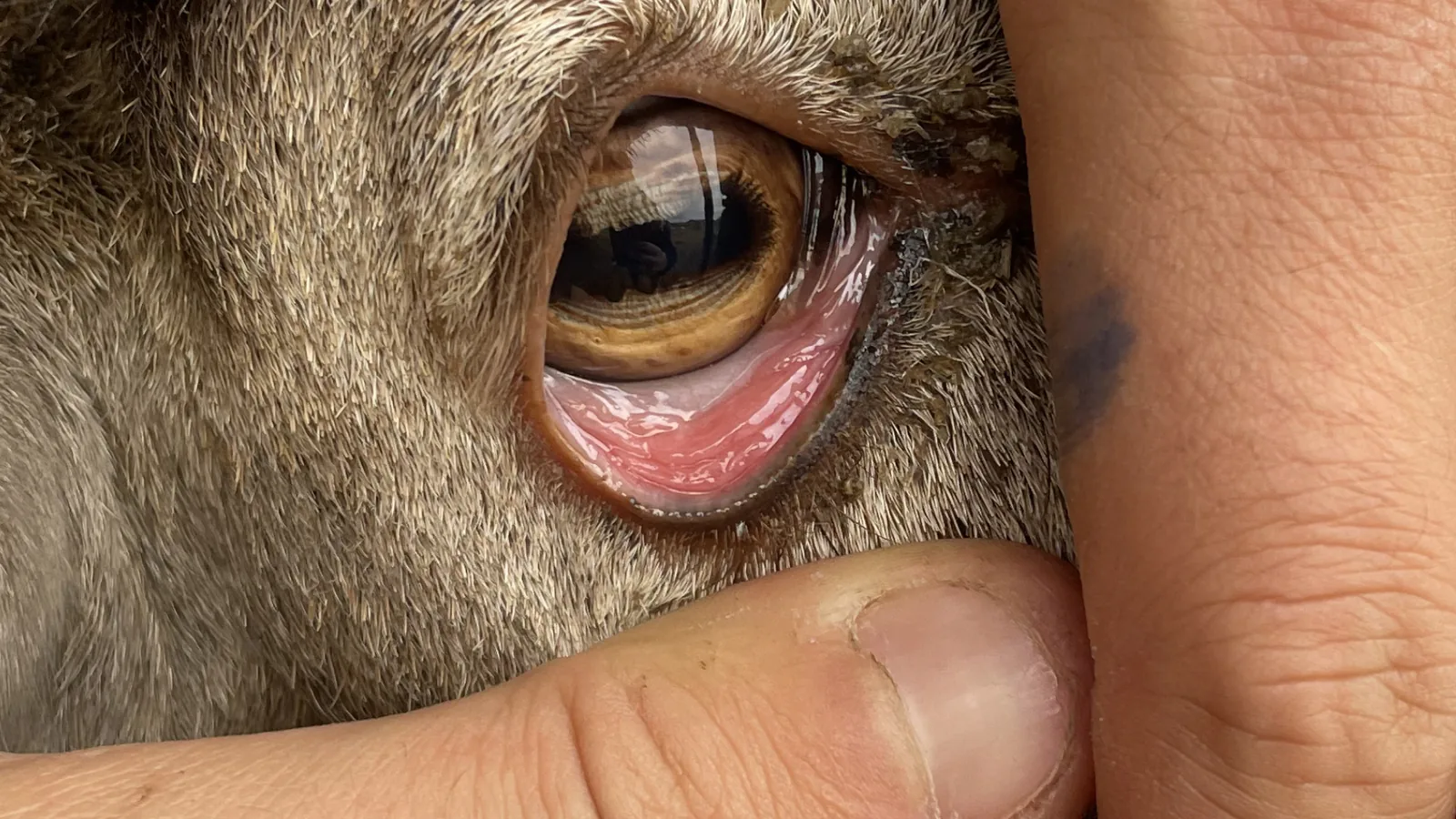
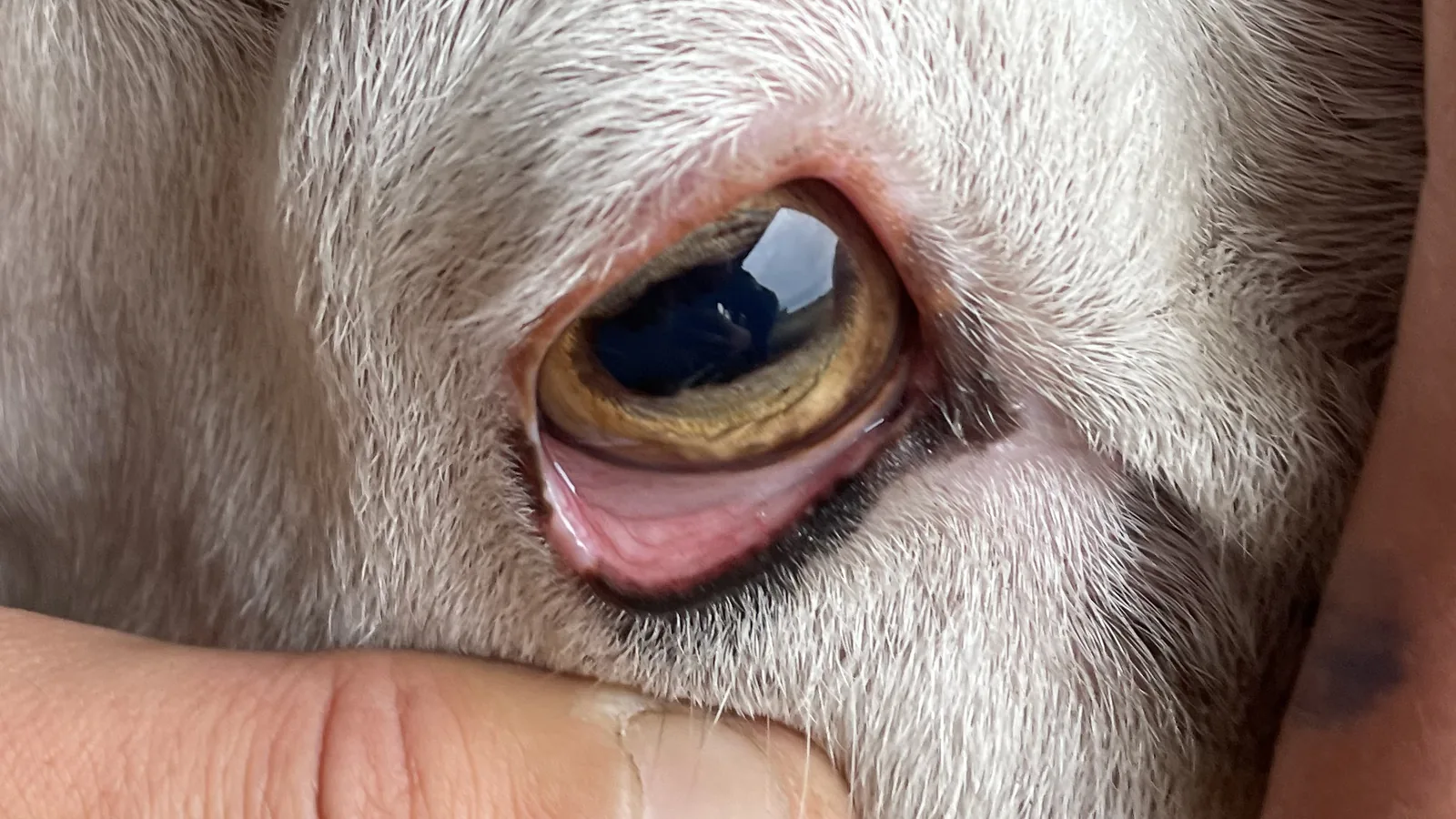
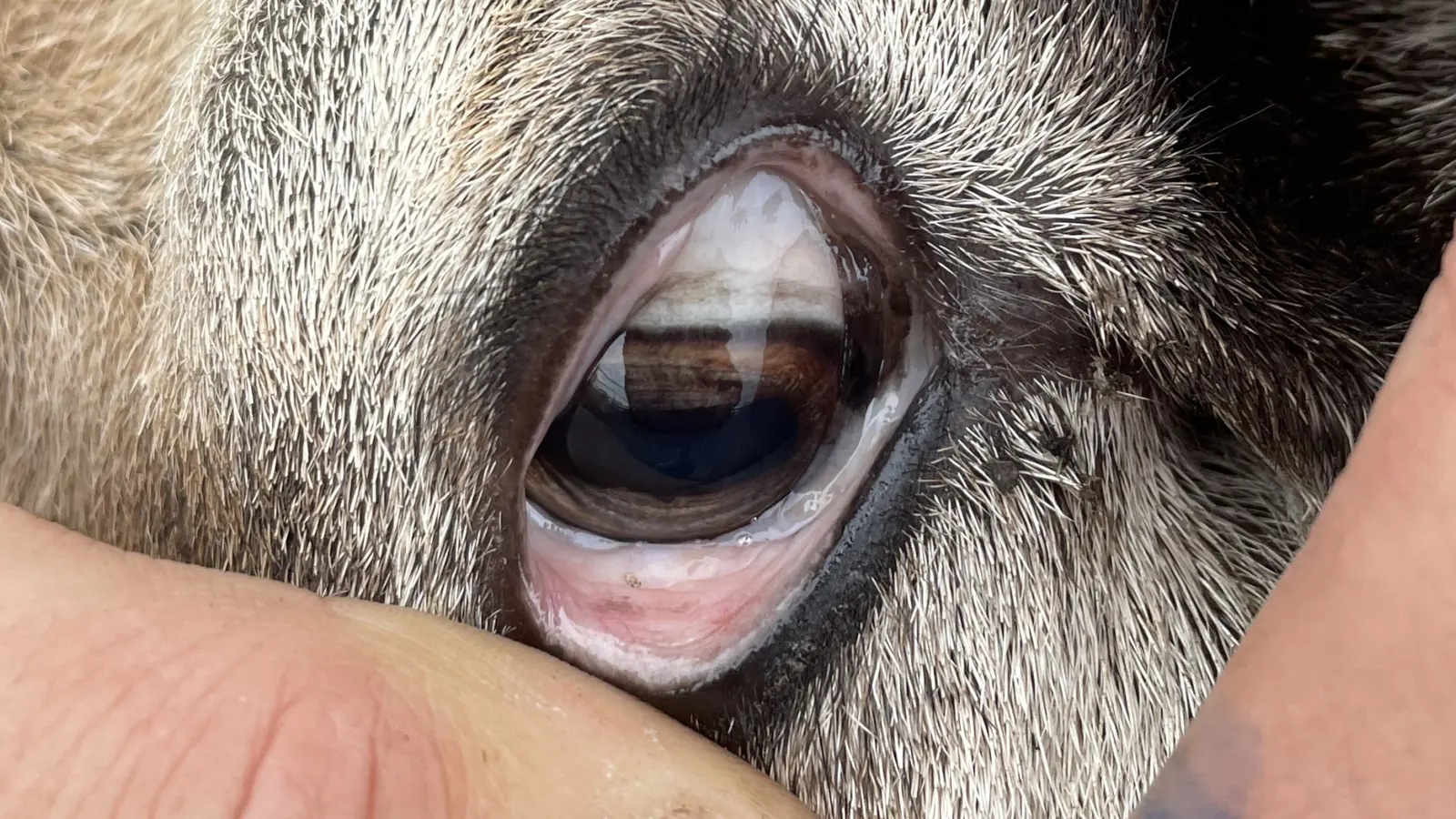
Do not score from photos or screens. Camera, lighting, and display settings change colour. Use natural daylight, your official card, and your training. If you are unsure, consult your veterinarian or another experienced producer.
This article covers recordkeeping around the check. It is not veterinary advice and does not provide a treatment threshold, product choice, amount, or schedule.
What repeated records can show
One field check is one observation at one moment. A series of records can show which animals repeatedly need follow-up under the farm's protocol, whether a planned recheck happened, and how observations line up with season, pasture, body condition, and other signs.
That history gives your veterinarian and flock team better context. It may also inform later flock review. It does not diagnose the cause of anemia, prove that a product worked, or make a breeding or culling decision by itself.
A complete record also prevents a common gap: the observation is written down, but the linked treatment or recheck is not. Keep the observation, action, and follow-up connected to the same animal.
What to record at each check
Use paper, a spreadsheet, or an app. Keep the fields short enough to finish beside the animal.
| Field | What to capture |
|---|---|
| Date and time | When the in-person check happened |
| Animal ID | The tag or name used on the farm |
| Both eyes checked | A simple yes/no technique check |
| Official-card category | The category assigned in person with the official card |
| Other observations | Body condition, bottle jaw, scours, appetite, or anything else seen |
| Action under the farm protocol | No action, treatment recorded separately, recheck, or veterinary follow-up |
| Treatment details, if applicable | Product, amount, route, time, withdrawal date, and who administered it |
| Checker | Initials or name, especially when more than one person checks animals |
Do not leave an empty field to mean “normal.” Write the observation or mark that the field was checked. That distinction matters when someone reviews the record weeks later.
Get the official FAMACHA card after training. If you have not completed the training, take an approved FAMACHA certification course before using it.
Where Ranch.Bot fits
Ranch.Bot keeps the observation, treatment, and follow-up records you enter in plain language and ties them to the animal. A field note can stay short:
Ewe 184: official-card observation recorded, both eyes checked in daylight, follow-up Friday.
Ranch.Bot proposes a structured record for you to review before it saves. It does not interpret an eyelid photo, assign a FAMACHA category, set a treatment threshold, or choose a dewormer.
Keep the protocol with your veterinarian and the official card in your hand. The record gives the next check a history instead of a blank page.
Ranch.Bot turns field notes like these into livestock records you can review and find later. Schedule a walkthrough.