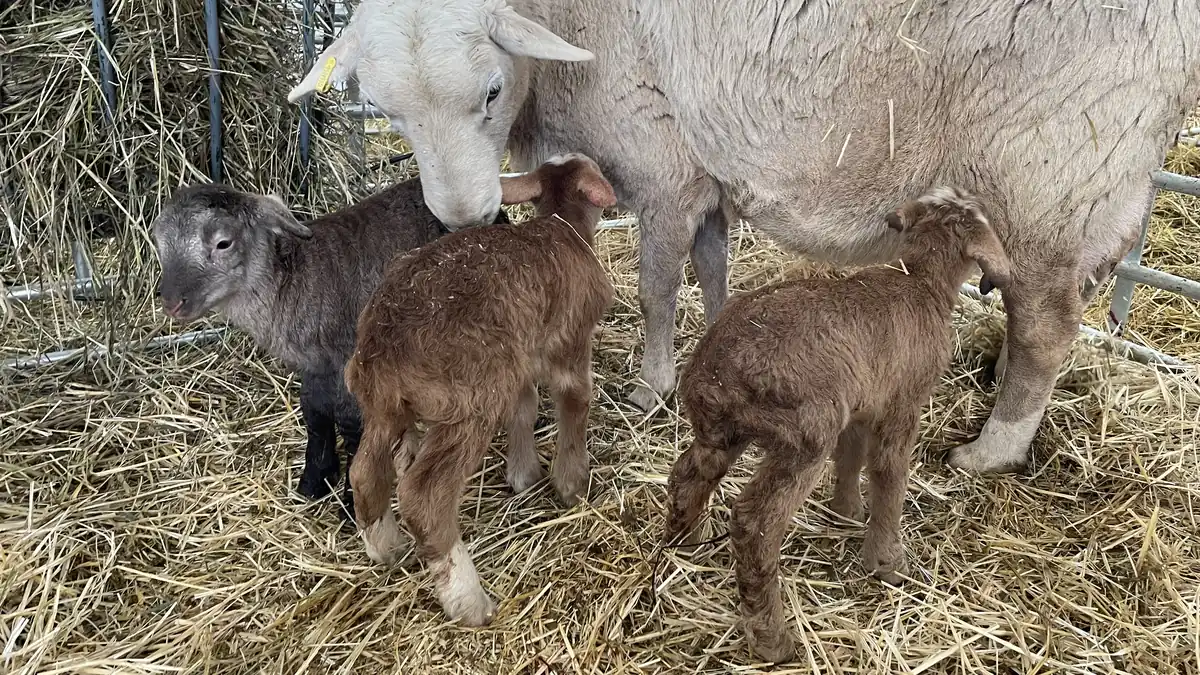
The Essentials of Calving & Lambing Records

The most predictive per-animal record on a cow-calf or sheep operation is the one made at the calving pen or in the lambing jug. Next year's keep/cull list is decided by what you wrote down at two in the morning in March — or by what you didn't. A cow that needed a hard pull tells you something a weaning weight never will, but only if the difficulty got recorded against her name.

This is the canonical guide to calving and lambing records: the field set, the difficulty code that doubles as a culling signal, and how to capture death loss so it feeds the flock numbers. It is about the record, not the obstetrics — when and how to assist stays between you and your vet; what you write down is the part this guide covers.

The birth record is your most predictive record

Production numbers — weights, gains, frame — describe an animal after the fact. The birth record predicts what happens next: whether a dam belongs in the herd next year, which sire group she should go to, whether her daughters are worth keeping. None of that is answerable from weaning weights alone.

The catch is that the record has to be made when the event happens. Calving and treatment notes captured later lose the details that matter most — the calving-ease score, the exact time, whether the calf nursed on its own. The canonical version is the one written beside the animal.

The field set

The canonical field set, and why each field earns its place:

FieldWhy it earns its place
Dam IDEverything ties back to the female; without it, the birth is an orphan
Sire / breeding groupSets next year's mating decisions and calving-ease patterns
Date and timeTime of day catches labor that ran too long; date drives your season calendar
Birth weightDon't guess — a heavy calf is a calving-ease clue, but only if weighed
SexDrives replacement and marketing math
Single / twin / tripletLitter size is the foundation of flock lambing math
Difficulty / assistance codeThe single most predictive field — see below
Stage of labor at interventionHow far along she was when you stepped in
Colostrum (yes/no, timed)A calf or lamb that didn't nurse in the first hours is on a watch list
Calf / lamb ID pairingMatches the offspring to the dam — the whole point of the record
Dam mothering / udderA female that won't claim her young or has a bad udder shows up here first

Most operations already capture most of this somewhere. The two fields that separate a working record from a notebook of guesses are the difficulty code and the stage of labor at intervention — the ones nobody remembers correctly three days later.

The difficulty code is a culling signal

The difficulty or assistance code is the field that does the most work over time. Write it as a plain word at the pen, then map it to the numeric calving-ease score breed associations and genetic evaluations use. The two systems describe the same event:

What you writeNumeric scoreWhat it means
Unassisted1No problem, calved on her own
Easy pull2Slight problem, a hand or a light pull
Hard pull3–4Needed assistance or considerable force
MalpresentationCalf or lamb backward or leg back
Caesarean5Surgery

The numeric 1–5 scale is the one Beef Research Canada, ICAR, and the breed associations use for calving-ease evaluation; the verbal code is the one you can actually write at two in the morning. Keep both — the word for you, the number for any genetic records or EPD work downstream.

The reason this field earns its keep is that it compounds into a decision. A dam that needed a hard pull this year, and another last year, is telling you something about her pelvic capacity, her sire choice, or both. A malpresentation is often a one-off; a repeat hard pull is a pattern. Read across a female's births and the keep/cull answer starts writing itself — which is exactly the decision keep/cull records are built on.

The stage-of-labor field is the subtler companion. A cow you assisted because the calf was in the canal and simply stuck is a different story from one that made no progress and needed help early. The first is often a big-calf problem; the second can be a structural one. Both get a difficulty code; only the stage note tells them apart.

Capture death loss as a first-class field

Losses belong in the same record as the live births, not in a separate mental tally. At minimum: born alive or dead, when the animal died, and a best guess at why. Around calving, dystocia is behind a large share of calf losses — the Iowa Beef Center notes some studies associate it with roughly a third of calf losses, and national monitoring of calf deaths puts it behind about half of all losses through weaning. The death you couldn't prevent still becomes a data point if you write it down: was it a first-calf heifer, a particular sire group, a stretch of weather, a ewe with triplets?

For sheep, the newborn-loss risk factors are well documented — low birth weight, low colostrum intake, a difficult birth, large litter size, and poor hygiene (NADIS). Recording which of those applied to each loss is how a flock finds its leak. Lambing percentage and your own flock numbers are only as honest as the per-lamb birth and death records behind them; the averages describe nobody's flock.

Timing: in the moment, not after chores

The birth record's great enemy is the transfer step — the pocket notebook that's supposed to reach the spreadsheet and doesn't, because calving season is busy and February is cold. Whatever system you use, the record has to be made where the work happens.

That means one consistent dam ID used everywhere, a note complete enough to stand alone, and capture at the event rather than after chores. "1417, bull calf, easy pull, nursed" is a record; "1417 had a calf" is a reminder that decays overnight.

A birth that needed treatment starts a second clock: an assisted or weak calf often gets antibiotics or colostrum support, and that treatment carries a withdrawal period of its own. Keep birth and treatment under the same ID so the history pulls together later.

The one-page sheet

The field set above works on a single sheet you can laminate and keep at the calving pen or in the lambing barn. One row per birth, the difficulty code as a circled letter, death loss on the same sheet. It runs on paper, on a whiteboard, or in any app — useful to anyone, with or without Ranch.Bot. (Ranch.Bot doesn't generate or print that sheet; the lambing record template covers the same idea for the sheep side.)

Where Ranch.Bot fits

Ranch.Bot keeps per-animal birth records you enter in plain language — "1417, bull calf this morning, easy pull, nursed on his own, big calf" — and ties the birth, the difficulty, and any follow-up treatment to the female and her calf, so at culling and breeding time you pull a dam's full calving history instead of flipping back through a notebook. You review every record before it saves. The judgment — which assistance codes or repeated losses earn a cull, which sire group to send her to — stays your call; what Ranch.Bot handles is keeping every birth tied to the right animal and searchable when the decision comes.

Write the difficulty code. Write it every time. Years of easy pulls against one hard one is a different story from three hard pulls in a row, and only the record tells them apart.


Ranch.Bot turns plain-language notes like "1417, bull calf, easy pull, nursed" into structured calving records you can search by dam at culling time — and you review every record before it saves. Start a 14-day free trial at ranch.bot.