What makes Ranch.Bot different?
Reviewed September 8, 2026; Tellia added and verified September 9, 2026. SMS guidance, CattleOS and Agrivanna reviewed September 16, 2026. Competitor descriptions below link to the vendors' own pages.
Ranch.Bot keeps livestock records from notes you text while the work is fresh. Check the draft in the web app before saving, then find the animal or group's history when you need it. The aim is less record entry waiting for you after chores.
A useful livestock software comparison starts with that ordinary working day. Ranch.Bot brings texted notes, review before saving, and help with existing records into one service. Here is how that fits together, and where other livestock and farm software may suit your operation.
Text the note while it is fresh
You have just moved a group to another pasture. The phone is already in your pocket. With Ranch.Bot, you can send the note by ordinary SMS without opening a record-entry form.
After a short web setup, enable Text-in for your registered phone. Include the animal or group and the date, especially when recording something that happened earlier.
Type the event in your own words or use your phone’s keyboard dictation. On iPhone, tap the keyboard microphone and speak, then check the text, especially tag numbers.
This example uses made-up data and a group already in the farm:
Moved the ewe lambs from South pasture to West pasture on Aug 23.
Make the note while the details are fresh. If you’re out of service, keep it in your messaging app and send when coverage returns. Send the saved draft or retry a message marked undelivered. Include the actual event date when sending later.
Your familiar message history lets you look back at what you sent. A note held on the phone is not a saved Ranch.Bot record. Ranch.Bot receives it only after delivery, then prepares records for review before saving. SMS can work where mobile data is weak, but delivery needs SMS service. Setup and web review need a data connection.
The Text-in guide explains iPhone dictation and failed-message retry. Dictation availability and offline operation depend on the device and language.
See what will save
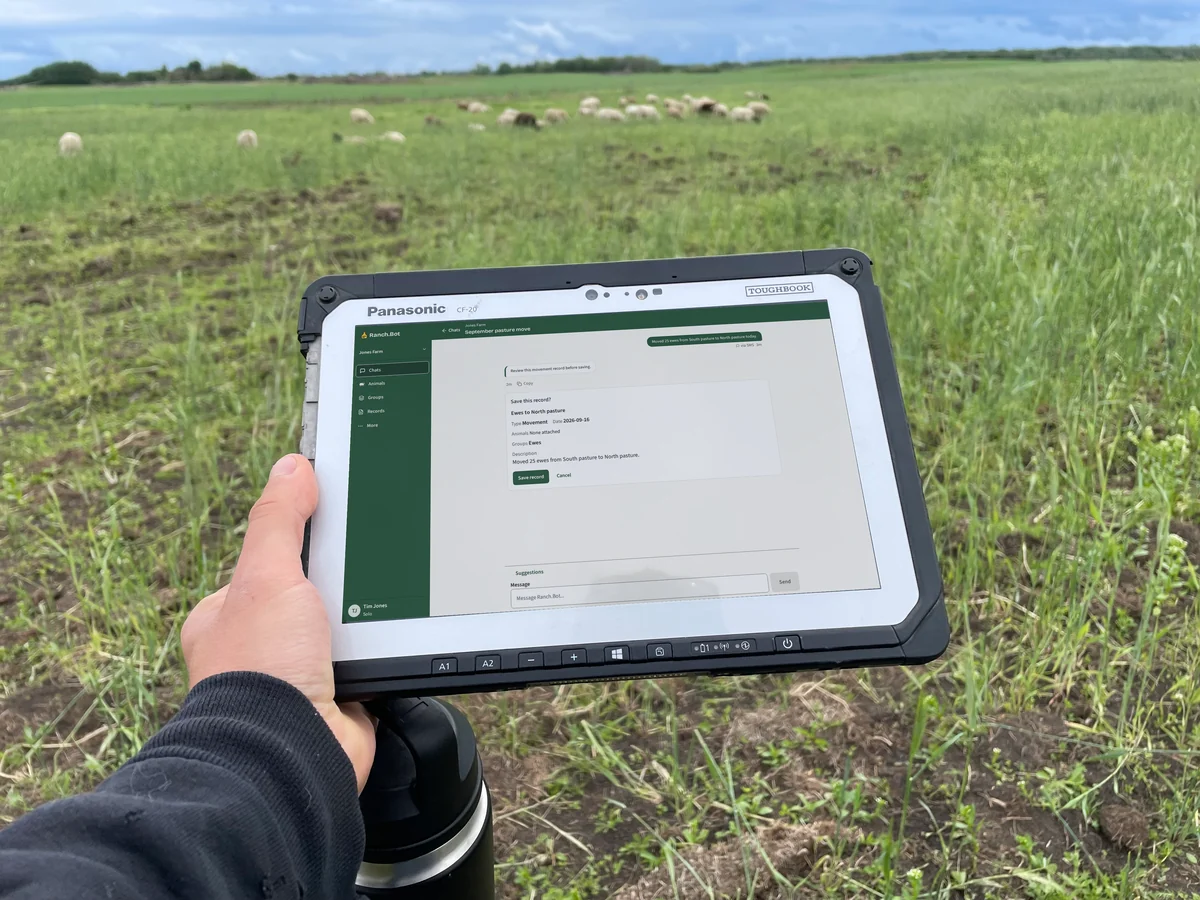
Ranch.Bot reads the note and prepares a record for you to check. In the pasture example, you review the ewe-lamb group, the August 23 date, and the movement from South to West pasture.
If the group or a detail is wrong, cancel the proposal and clarify the note. Confirm it when it is right. In-app and Text-in assistant proposals wait for that decision before saving.
That check matters when two groups have similar names or yesterday's move is being recorded today. You can see how the note was understood before it joins the history. The saved movement records what happened; it does not move animals between groups for you.
Find the history when you need it
Later, you might need to check where the ewe lambs were during August. Ask for their movement records in the web app, or open the group's history. The saved date and pasture note give you something to check without remembering which conversation contained it.
The same approach keeps a health observation with the animal it concerns. A note about calf 2245N eating well belongs on that calf's history, where you can find it at the next check.
You can also export farm records. Ranch.Bot's farm ZIP includes records, their animal and group links, and original farm-linked files. Other members' private conversations and account credentials are excluded. The archive is available to download for 24 hours. The export guide explains the formats and scope. The worked movement example shows the text, review, and lookup together.
Get help bringing your records across
Starting with software should not mean retyping every useful page from the barn book. Upload your existing files through Tools → Import. Ranch.Bot reads them, then a person checks the proposed records against the originals before anything is loaded. Unclear details need checking, not guessing.
Customers receive a 20-minute welcome call and help loading an agreed starting set of records. A recorded walkthrough and email are available if a live time does not suit. You can begin with a current event when that is more useful than bringing across older history.
Ranch.Bot is built by a livestock producer and senior software developer, currently focused on lamb production with previous beef production experience. That puts responsibility for the software and its fit with livestock work with the same person. Read about the people behind Ranch.Bot.
Plans are priced around the people using the software. Solo covers one operator; Team includes three people, with additional people available. The current plans explain those options.
How other livestock software fits
There are several good reasons to choose livestock software. These alternatives cover different amounts of the farm's work. The descriptions reflect public product pages, not hands-on testing. The existing entries were reviewed September 8, 2026; Tellia was verified September 9, 2026. CattleOS and Agrivanna were checked September 16, 2026.
| Option | What it focuses on |
|---|---|
| Paper or spreadsheets | Familiar, flexible records when you can keep them current and find the detail later. |
| CattleMax | Cattle breeding, calving and health records, with breed-association, reader and scale connections. |
| AgriWebb | Animal records alongside grazing, farm maps, teams and offline recording. |
| Farmbrite | Livestock alongside crops, accounting, tasks and sales for broader farm management. |
| CattleOS | Advertises voice notes and farm history, with offline recording and sync in CattleOS Field and tools for managers and crews. |
| Agrivanna | Advertises spoken ranch notes with confirmation, offline capture and sync, pasture tools, and assisted record loading. Some features are still rolling out; ask which are available for your operation. |
| Tellia | Calls, WhatsApp and voice notes turned into configurable agricultural records, reports and tasks, with livestock examples. |
| HerdCommand | Plain-language cattle notes, editable drafts, review before saving and searchable animal history. |
| Herdwatch | Livestock records with an in-app assistant that answers questions using the farm's records. |
| ewePro | Canadian sheep-specific breeding, lambing and performance records, with offline recording and reader support. |
Ranch.Bot shares some features with these products. Its particular offer brings ordinary SMS capture and a visible check before saving together with help getting your records into use.
When another tool may fit better
If you need offline recording, native reader or scale integrations, or direct traceability connections, compare tools built for those jobs. Ranch.Bot does not currently offer those features.
Bring one record problem from your own operation. Schedule a walkthrough to see how Ranch.Bot handles the note and how you would find it later.